strategy · July 2026
From AI ambition to action: a practical starting point
A decision framework for leaders who want to move from interesting ideas to useful, responsible experiments.

Many organizations know they need to do something with AI, but knowing where to begin is difficult. The most useful starting point is rarely “Which model should we use?” It is usually: which decision, workflow, or customer experience could be meaningfully improved?
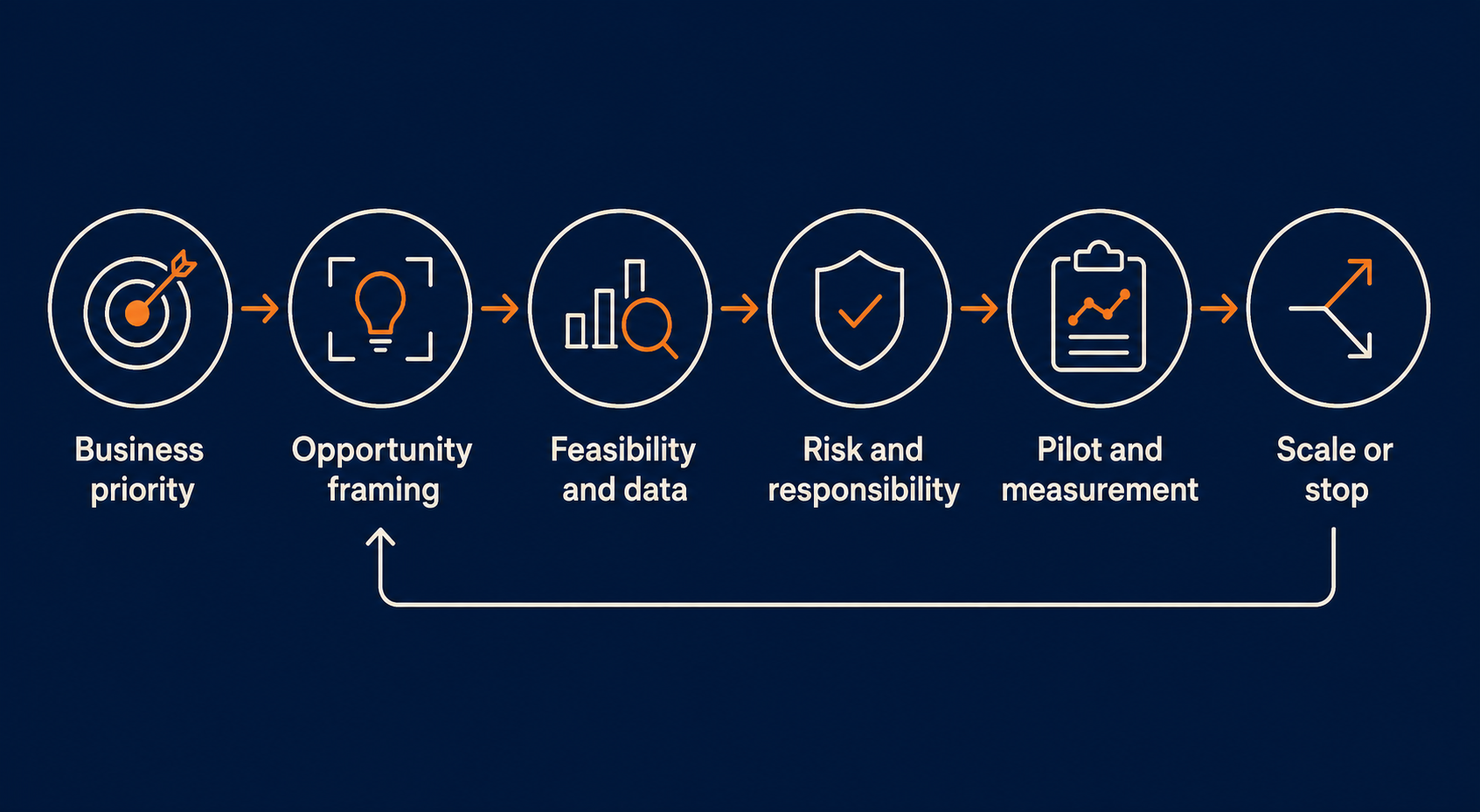
A practical AI strategy connects business priorities, user needs, data, technical feasibility, risk, and the organization’s ability to adopt the result.
Start with a business priority
Avoid beginning with a technology catalogue. Identify a real priority such as reducing response time, improving forecasting, supporting employees with repetitive work, improving decision quality, or reducing operational risk. The opportunity should connect to a measurable outcome.
Frame the opportunity around people
AI changes how people work. Map who experiences the problem, what decision they are trying to make, what information they need, where uncertainty occurs, and what would make them trust or reject a recommendation.
Test feasibility early
Before a large build, examine data quality, privacy, integrations, performance expectations, human review, operating cost, monitoring, and maintenance. A focused discovery can reveal viability before significant investment.
Treat responsibility as product design
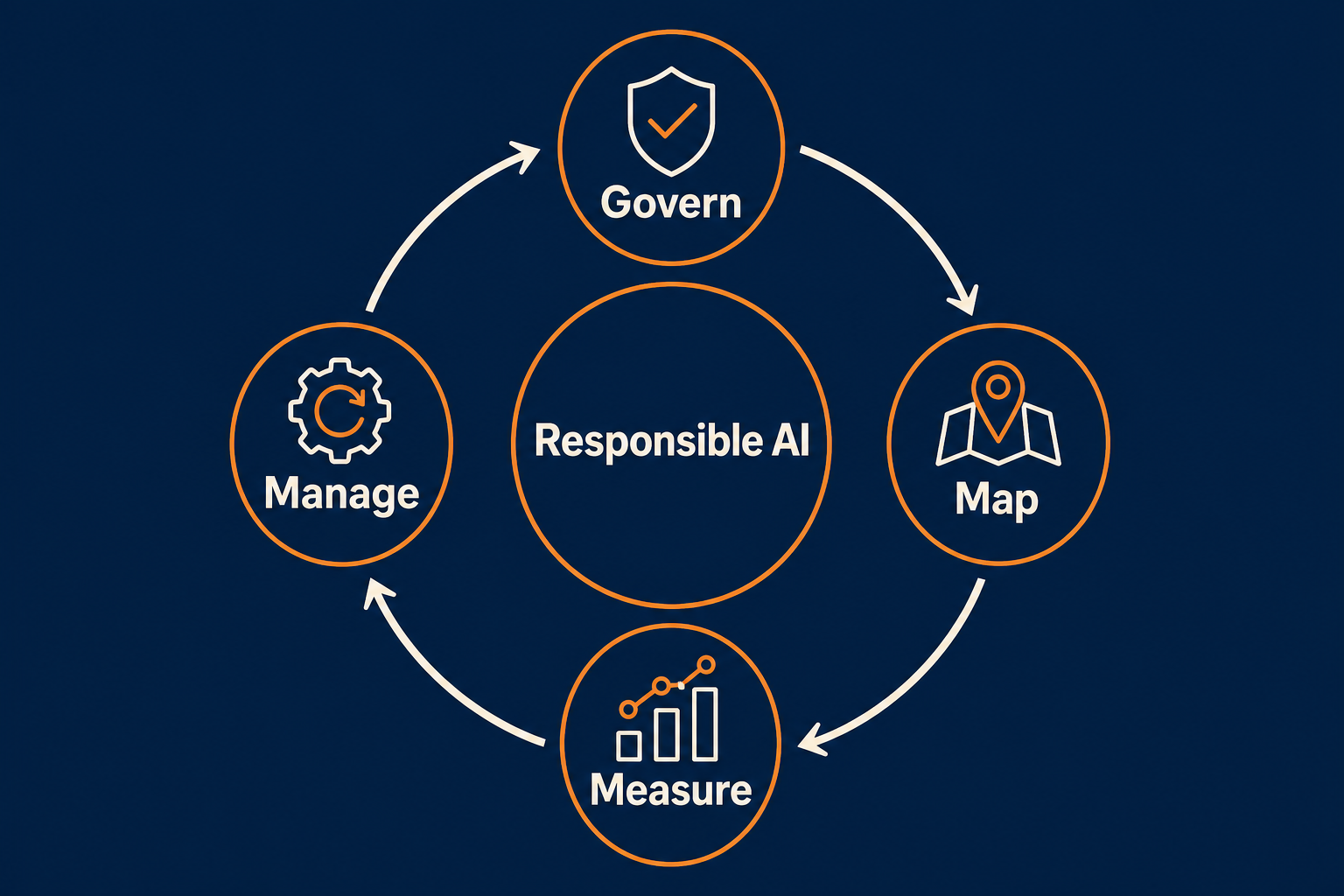
The NIST AI Risk Management Framework organizes AI risk work around Govern, Map, Measure, and Manage. These activities continue throughout the AI system lifecycle rather than appearing only at launch.
Pilot with a decision in mind
A pilot should answer whether the target outcome improves, quality is sufficient, people can understand and challenge the output, risks are manageable, and the solution is worth operating at scale. The right result may be to scale, redesign, or stop.
AI strategy is not a list of tools. It is a disciplined way to decide where intelligent systems can create value, how they should be designed, and what must be true before they are trusted in practice.